

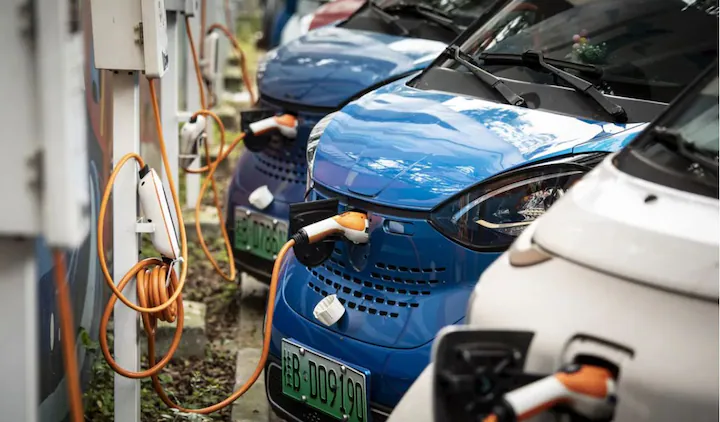
There was a time—not too long ago—when owning an electric vehicle in India felt like a bit of a gamble. You’d plan your routes not around traffic, but around charging points. Range anxiety wasn’t just a phrase; it was a real, nagging concern. Fast forward to 2026, and things feel… different. Not perfect, but definitely moving in the right direction.
Let’s talk about how this shift is happening, and what it actually means on the ground.
A Network That’s Finally Starting to Make Sense
If you look at India’s EV landscape today, the first thing that stands out is visibility. Charging stations are no longer hidden in obscure corners or limited to metro cities. You’ll spot them at malls, highways, office complexes, even residential societies.
This didn’t happen overnight. A mix of government policies, private investments, and plain old market demand pushed things forward. Companies like Tata Power, Ather, and Reliance stepped in aggressively, building networks that are slowly stitching the country together.
What’s interesting is that the focus has shifted from “just install chargers” to “install them where they actually matter.” Highways connecting cities like Delhi–Jaipur or Mumbai–Pune now have decent coverage, making intercity EV travel less stressful.
Fast Charging vs Slow Reality
Let’s be honest—charging speed still matters. And it’s still a bit of a mixed bag.
Fast chargers are becoming more common, especially in urban zones and along major corridors. These can juice up a car to 80% in under an hour, which feels almost… normal now. But step slightly outside prime areas, and you’ll still encounter slower chargers that require patience.
That said, there’s progress. Battery technology is improving, and infrastructure is slowly catching up. It’s not seamless yet, but it’s no longer frustrating in the way it used to be.
The Role of Government Push
India’s EV push isn’t accidental. Schemes like FAME (Faster Adoption and Manufacturing of Electric Vehicles) and various state-level incentives have played a big role in encouraging both adoption and infrastructure development.
Subsidies for setting up charging stations, reduced GST rates, and mandates for EV-ready buildings—these things add up. Cities like Delhi, Bangalore, and Hyderabad have taken the lead, but even tier-2 cities are now part of the conversation.
Still, policy alone doesn’t build networks. Execution does. And that’s where private players have stepped in to fill the gaps.
Residential Charging: The Unsung Hero
While public charging gets all the attention, home charging is quietly doing the heavy lifting.
Most EV owners in India rely on overnight charging at home. It’s convenient, cheaper, and—frankly—less stressful. Apartment complexes are slowly adapting too, installing shared charging points or allowing individual setups.
This shift matters because it reduces pressure on public infrastructure. If people can charge at home, public stations can focus on long-distance travel and emergency top-ups.
The App Ecosystem: Finding a Charger Isn’t Guesswork Anymore
Remember when finding a charging station meant Googling and hoping for the best? That phase is fading.
Today, apps from providers like Tata Power, Statiq, and ChargeZone offer real-time data—availability, pricing, even wait times. It’s not flawless, but it’s a huge step up from the uncertainty of earlier days.
Integration is still an issue, though. Not all apps talk to each other, and a unified platform would make life easier. But we’re getting there, slowly.
EV Charging Infrastructure India me kaise evolve ho raha hai (2026 update)
If you zoom out, the evolution is less about sudden breakthroughs and more about steady, layered progress. The ecosystem is expanding—not just in numbers, but in quality and usability.
We’re seeing smarter chargers, better grid integration, and even renewable energy being used to power stations. Solar-powered charging hubs, for instance, are popping up in certain regions, hinting at a more sustainable future.
At the same time, challenges remain. Land availability, grid capacity, and standardization are still hurdles. But unlike before, these problems are being actively worked on rather than ignored.
What Still Needs Work
It wouldn’t be fair to paint an overly rosy picture. There are still gaps—some pretty obvious ones.
Rural and semi-urban areas lag behind. Interoperability between networks is limited. And pricing can sometimes feel inconsistent, depending on the provider and location.
Then there’s the human factor. Not everyone is familiar with how EV charging works, and awareness campaigns are still catching up. For first-time users, the experience can feel slightly intimidating.
A Future That Feels… Possible
Despite the imperfections, there’s a sense of momentum. EV charging in India is no longer a niche concern—it’s becoming part of everyday infrastructure, like petrol pumps once did.
And maybe that’s the biggest shift of all. It’s not about whether the infrastructure will improve—it’s about how quickly it can keep up with demand.
For now, the journey continues. A little uneven, a bit unpredictable, but undeniably forward.

