There’s a quiet moment most of us don’t notice. You open a food delivery app, scroll past dozens of restaurants, pick something that looks good, and hit order. Thirty minutes later, food arrives—hot, neat, almost predictable.
What we don’t see is where that food actually comes from.
Because increasingly, it’s not from a traditional restaurant at all.
The Kitchen Without a Dining Room
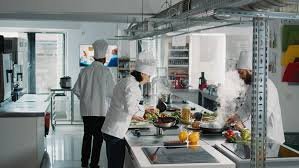
Imagine a restaurant with no tables, no waiters, no décor—just a kitchen. That’s essentially what a cloud kitchen is. It exists purely to fulfill online orders, nothing more, nothing less.
At first, it sounds a bit… impersonal. But then you think about it—most urban diners today aren’t looking for ambience every time they eat. Sometimes, they just want convenience. Quick, reliable, and reasonably priced.
That shift in behavior has created space for something new. Or maybe not entirely new, just newly scaled.
Lower Costs, Faster Experiments
Running a full-service restaurant is expensive. Rent in prime areas, interior design, staff, utilities—it all adds up quickly. And if your concept doesn’t work? You’re stuck with high overheads and limited flexibility.
Cloud kitchens flip that model.
Without the need for a physical dining space, costs drop significantly. Entrepreneurs can experiment with multiple cuisines from a single kitchen. One setup, three brands. Maybe even five. If one idea doesn’t click, it can be tweaked—or replaced—without major losses.
This flexibility is part of why Cloud Kitchens ka boom: Restaurant industry ka hidden shift is gaining so much traction in cities across India.
Data Is the New Chef’s Assistant
Here’s where things get interesting. Traditional restaurants rely on instinct, experience, and a bit of gut feeling. Cloud kitchens, on the other hand, lean heavily on data.
What’s selling? At what time? In which area? At what price point?
Delivery platforms provide insights that help brands refine menus, adjust pricing, and even decide what cuisine to launch next. It’s less guesswork, more calculation.
That doesn’t mean creativity disappears. It just means it’s guided differently—shaped by patterns rather than purely intuition.
Multiple Brands, One Kitchen
You might think you’re ordering from five different restaurants, but there’s a good chance they’re all coming from the same place.
It’s a strange idea at first, but it works. A single cloud kitchen can run multiple virtual brands—each with its own menu, identity, and target audience.
Craving biryani? There’s a brand for that. Late-night pizza? Another one. Healthy bowls? Yep, that too—all from the same kitchen.
It’s efficient, scalable, and surprisingly common.
Cloud Kitchens ka boom: Restaurant industry ka hidden shift
What’s happening here isn’t just a trend—it’s a structural change.
The restaurant industry is slowly decoupling food from physical space. Dining out will always exist, of course. There’s something irreplaceable about the experience of sitting in a restaurant, sharing a meal, soaking in the atmosphere.
But not every meal needs that.
Cloud kitchens are filling the gap between convenience and quality. They’re not replacing restaurants—they’re redefining what a “restaurant” can be.
Challenges That Don’t Show Up on the Menu
Of course, it’s not all smooth sailing.
Competition is intense. Since entry barriers are lower, more players enter the market. Standing out becomes harder, especially when customers are scrolling through endless options.
There’s also the issue of brand trust. Without a physical presence, everything depends on online reviews, ratings, and consistency. One bad experience can hurt more when it’s your only touchpoint with customers.
And then there’s logistics—delivery times, packaging, maintaining food quality during transit. It’s a different kind of challenge compared to traditional dining, but just as demanding.
The Human Side of a Digital Kitchen
It’s easy to think of cloud kitchens as purely technical or operational. But behind every order is still a team—chefs, kitchen staff, delivery partners—working in sync.
The difference is, their work stays mostly invisible.
There’s no applause when a dish is served, no direct feedback from diners. It’s a quieter kind of effort, measured in ratings and repeat orders rather than smiles across a table.
What This Means for the Future of Food
If you step back and look at the bigger picture, the rise of cloud kitchens reflects something deeper about how we live today.
We value convenience. We’re comfortable with digital interfaces. And we’re open to new formats, as long as they deliver what we need.
Will traditional restaurants disappear? Unlikely.
But will cloud kitchens continue to grow? Almost certainly.
Because sometimes, all we really want is good food, delivered without fuss. And in that space—somewhere between speed and satisfaction—cloud kitchens have found their place.
