From the journal · April 27, 2026
Degrees or Skills? The Quiet Shift Changing How India Learns
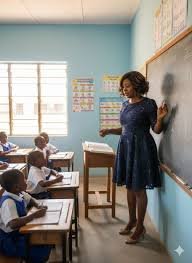
There’s a moment most people remember—sitting in a classroom, staring at a textbook, wondering, “Will I actually use this in real life?” It’s not rebellion, not laziness… just a quiet question that lingers longer than it should.
For decades in India, the answer didn’t really matter. Degrees were the goal. Engineering, medicine, MBA—choose your lane, stick to it, and hope it pays off. But somewhere along the way, things started shifting. Not loudly, not all at once, but enough to make people pause and rethink.
Related reading: Learning in Small Bites: Why Education Feels Different Now · When Learning Starts to Feel Personal Again: The Quiet Rise of AI Tutors
The Comfort of Degrees (And Their Limits)
Let’s be fair—degrees still hold value. They offer structure, credibility, and a kind of social reassurance. Parents understand them. Employers recognize them. Society, in general, respects them.
But here’s the catch. A degree doesn’t always guarantee competence.
You’ll find graduates who’ve spent years studying a subject but struggle with practical application. It’s not entirely their fault—the system often prioritizes exams over experience, theory over practice.
And in a fast-changing job market, that gap becomes more visible.
Skills Are Starting to Speak Louder
On the flip side, skills have a way of proving themselves. You can’t fake a working app, a well-designed website, or a successful marketing campaign. Either you can do it, or you can’t.
This is where Skill-based Learning vs Degree System: Future of education India me becomes more than just a debate—it starts to feel like a real shift in priorities. People are asking different questions now: “What can you build?” “What can you solve?” “What can you actually do?”
And sometimes, the answers don’t come from traditional classrooms.
The Rise of Alternative Learning Paths
Scroll through YouTube, Coursera, or even Instagram, and you’ll see it—people learning everything from coding to photography to financial trading without stepping into a college.
It’s not just about accessibility, though that’s a big part of it. It’s about control. Learners can choose what they want to learn, when they want to learn it, and how deep they want to go.
Bootcamps, online certifications, mentorship programs—they’re filling gaps that formal education hasn’t quite managed to address.
Of course, not all of them are great. Some are overhyped, others lack depth. But the good ones? They’re changing lives quietly.
Employers Are Paying Attention (Slowly, But Surely)
A few years ago, not having a degree could close doors before you even knocked. Today, that’s not always the case.
Startups, especially, are more open to hiring based on skills. Portfolios matter. Real-world projects matter. Problem-solving ability matters.
Even larger companies are beginning to loosen their filters. Not everywhere, not completely—but enough to notice.
It’s a gradual shift, but it’s happening.
Skill-based Learning vs Degree System: Future of education India me
What’s interesting is that this isn’t a clean replacement. Skills aren’t entirely replacing degrees, and degrees aren’t disappearing overnight. Instead, the lines are blurring.
You’ll see engineers learning design, commerce students picking up coding, and graduates enrolling in short-term skill programs to stay relevant. It’s less about choosing one path and more about combining both.
This hybrid approach might actually be the future—where foundational education meets continuous skill-building.
The Pressure to “Choose Right” Is Easing
Earlier, choosing a degree felt like choosing your entire life. Get it right, and you’re set. Get it wrong, and… well, good luck.
Now, there’s a bit more flexibility. People are switching careers, learning new skills mid-way, exploring different paths without the same level of stigma.
It’s not easy, of course. There’s still pressure, still uncertainty. But there’s also space—space to experiment, to fail, to try again.
And that space matters.
Challenges That Still Need Solving
Let’s not pretend everything is sorted.
Skill-based learning can be inconsistent. There’s no standardization, no clear way to measure quality across platforms. And without discipline, it’s easy to start something and never finish.
On the other hand, the degree system still struggles with outdated curricula and a lack of industry alignment. Bridging that gap requires effort—from institutions, policymakers, and even students themselves.
There’s also the issue of accessibility. Not everyone has equal access to digital tools or quality education, whether traditional or alternative.
A Future That Feels More Personal
If there’s one thing that stands out, it’s this: education is becoming more personal.
Less about following a fixed path, more about building your own. Less about ticking boxes, more about creating value.
And maybe that’s the real shift—not skills versus degrees, but the freedom to define what learning looks like for you.
Because in the end, it’s not just about what you study. It’s about what you become capable of doing with it.