From the journal · April 28, 2026
Somewhere Between Speed and Scale: Making Sense of Edge and Cloud Computing

There’s a moment most of us don’t think about when we tap a button on our phone. A video loads instantly, a payment goes through, a map updates in real time. It all feels seamless—almost invisible.
But behind that smooth experience, something interesting is happening. Data is moving, decisions are being made, and systems are choosing where that work should happen.
Related reading: Emergency Notification Systems: A Business Essential · When a Small Website Becomes a Big Target: Rethinking Security in 2026
And that’s where the conversation around edge and cloud computing begins.
The Cloud We’ve Grown Used To
Cloud computing has been the backbone of digital growth for years now. Instead of storing data or running applications on local machines, everything lives on remote servers—massive data centers spread across the globe.
It’s convenient, scalable, and, honestly, kind of magical when you think about it. You can access files from anywhere, run complex applications without powerful hardware, and scale businesses without owning physical infrastructure.
For most use cases, the cloud works beautifully. But… it’s not always perfect.
When Distance Starts to Matter
Here’s the thing about cloud computing—it relies on distance.
Data travels from your device to a remote server, gets processed, and then comes back. Usually, this happens fast enough that you don’t notice. But in certain situations, even a slight delay can be a problem.
Think autonomous vehicles, real-time gaming, or industrial automation. In these cases, milliseconds matter. Waiting for a response from a distant data center isn’t always ideal.
That’s where edge computing quietly steps in.
Edge Computing: Closer Than You Think
Edge computing shifts the processing closer to the source of data. Instead of sending everything to the cloud, some tasks are handled locally—on devices, sensors, or nearby servers.
It’s not about replacing the cloud. It’s about reducing dependency on it when speed is critical.
Imagine a smart security camera. Instead of sending every frame to the cloud, it processes footage locally and only sends alerts when something unusual happens. Faster response, less bandwidth usage.
Simple idea, but powerful.
Edge Computing vs Cloud: Real-world applications comparison
If you look at real-world applications, the difference becomes clearer.
In healthcare, cloud systems store patient records and enable remote consultations. But edge computing can power wearable devices that monitor vitals in real time, alerting doctors instantly if something’s off.
In retail, cloud platforms manage inventory and analytics. Meanwhile, edge devices handle in-store experiences—like smart shelves or checkout systems that need immediate responses.
Even in smart cities, traffic signals and surveillance systems rely on edge processing for quick decisions, while the cloud handles long-term data analysis.
It’s less of a competition and more of a collaboration.
Not One or the Other—But Both
There’s a tendency to frame this as a debate: edge vs cloud. But in reality, most systems use both.
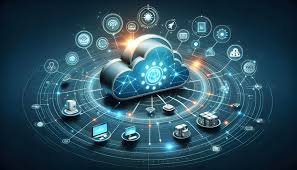
The cloud offers scale, storage, and heavy processing power. The edge offers speed, efficiency, and localized decision-making.
Together, they create a hybrid model that adapts based on need.
And honestly, that hybrid approach feels like the future.
Challenges That Don’t Get Enough Attention
Of course, it’s not all smooth sailing.
Edge computing comes with its own set of challenges. Managing multiple distributed devices can be complex. Security becomes more complicated when data is processed in many locations instead of one centralized system.
On the other hand, cloud systems can face latency issues and require stable internet connectivity—something not always guaranteed.
Balancing these trade-offs isn’t easy. It requires thoughtful design, not just technical capability.
Why This Matters More Than It Seems
At first glance, this might feel like a purely technical discussion. Something for engineers and IT teams to worry about.
But it affects everyday experiences more than we realize.
The speed of your apps, the reliability of smart devices, the efficiency of services you use—all of it is influenced by how data is processed and where it’s handled.
As technology becomes more embedded in daily life, these decisions become more visible, even if we don’t consciously notice them.
A Subtle Shift in How Systems Are Built
What’s happening right now isn’t a sudden revolution. It’s a gradual shift.
Developers and businesses are starting to think differently. Instead of defaulting everything to the cloud, they’re asking: “Does this need to happen here, or can it happen closer to the user?”
That question is shaping the next generation of applications.
The Road Ahead Feels… Balanced
If there’s one takeaway, it’s this: the future isn’t about choosing sides.
Edge and cloud computing aren’t rivals—they’re tools. And like any good tools, their value depends on how they’re used.
Some problems need the scale of the cloud. Others need the immediacy of the edge. Most need a bit of both.
And somewhere in that balance, technology becomes not just powerful—but responsive, efficient, and, in a way, more human.