From the journal · April 27, 2026
When Learning Starts to Feel Personal Again: The Quiet Rise of AI Tutors

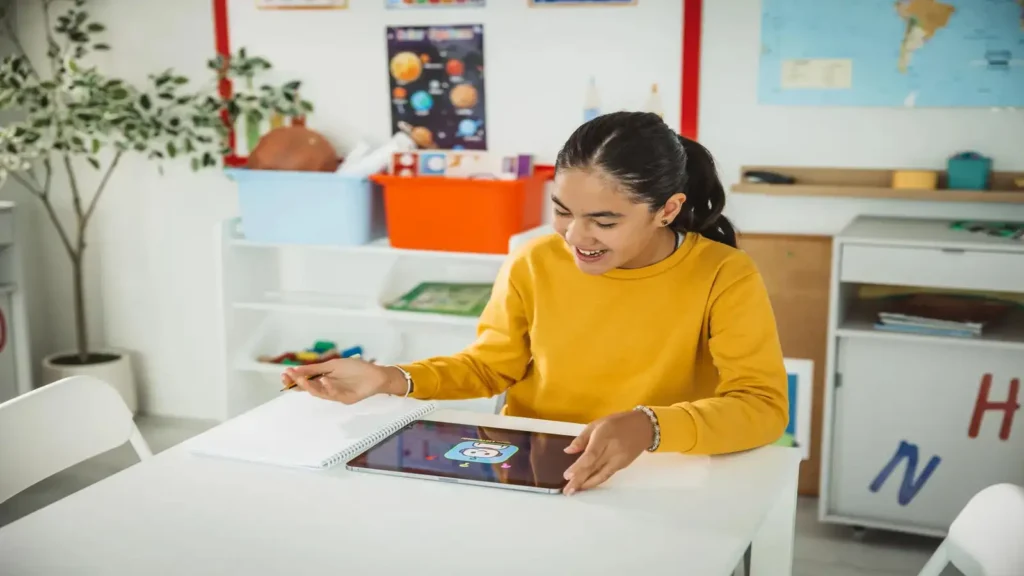
There’s something oddly comforting about being taught in a way that actually makes sense to you. Not the way a textbook insists, not the way a classroom rushes through it—but the way your brain naturally gets it. For years, that kind of learning felt like a luxury. Maybe you had a great tutor once, or a teacher who just “clicked” with you. But for most people, education has been a one-size-fits-all experience.
That’s slowly changing. And not in a loud, dramatic way. More like a quiet shift happening behind screens, late at night, when a student replays a concept until it finally lands.
Related reading: Learning in Small Bites: Why Education Feels Different Now · Degrees or Skills? The Quiet Shift Changing How India Learns
The Problem with Traditional Learning (That We All Know)
Let’s be honest—classrooms aren’t designed for individual pace. One student is struggling to keep up, another is bored out of their mind, and the teacher is trying to hold it all together. It’s not a failure of effort; it’s just how the system works.
Personalised learning has always been the ideal. But scaling it? That’s been the challenge.
Enter AI tutors.
What AI Tutors Actually Do (Beyond the Hype)
At first glance, AI tutors sound like just another tech buzzword. But when you actually use one, it feels different. They don’t get impatient. They don’t rush. They don’t assume you “should already know this.”
Instead, they adapt. Ask a question, and the explanation reshapes itself based on how you respond. Struggling with algebra? It breaks it down further. Already comfortable? It moves ahead.
That’s why conversations around AI Tutors ka role: Personalized learning ka next phase are becoming more grounded now—not just hype-driven, but experience-driven.
Because people are starting to feel the difference.
Learning at Your Own Pace (Finally)
One of the biggest advantages of AI tutors is something we’ve wanted forever but rarely had—control over pace.
You can pause, repeat, skip ahead, or go deeper without feeling judged. There’s no classroom clock ticking in the background. No pressure to “get it” in one go.
And oddly enough, that freedom changes how people learn. They become more curious. Less afraid of asking “basic” questions. More willing to explore.
It’s not just about speed—it’s about comfort.
The Personalisation Factor That Actually Works
We’ve heard the word “personalisation” thrown around for years. But in education, it often meant minor adjustments—different worksheets, maybe a tailored recommendation here and there.
AI tutors take it a step further.
They track patterns. Not in a creepy way, but in a helpful one. They notice where you hesitate, which topics you revisit, where you tend to make mistakes. And then they quietly adjust.
It’s almost like having a tutor who remembers everything about how you learn—and uses that to guide you better next time.
Not Just for Students Anymore
Here’s something interesting. AI tutors aren’t limited to school or college students. Professionals are using them too—learning new skills, brushing up on old ones, even exploring completely new fields.
Want to understand coding basics at midnight? Done. Need help with a presentation concept before a meeting? It’s there.
Learning is no longer tied to age or stage. It’s becoming continuous, flexible, and—dare I say—more human in its experience.
The Limitations We Shouldn’t Ignore
Of course, it’s not perfect.
AI tutors don’t replace human connection. They don’t pick up on emotional cues the way a real teacher might. They won’t notice if you’re having a bad day or feeling overwhelmed unless you explicitly say it.
There’s also the risk of over-reliance. If everything becomes guided, do we lose some of the struggle that actually builds deeper understanding?
These are valid concerns. And they’re worth thinking about as the technology evolves.
Teachers Aren’t Going Anywhere
If anything, AI tutors might actually make teachers more important, not less.
Think about it—if basic explanations and repetitive practice are handled by AI, teachers can focus on what they do best: mentoring, inspiring, guiding discussions, and helping students think critically.
It’s not a replacement. It’s a shift in roles.
Final Thoughts: A Subtle but Meaningful Change
The rise of AI tutors doesn’t feel like a revolution. It feels quieter than that. More personal.
It’s in the student who finally understands a concept after hours of trying. The professional who learns something new without enrolling in a full course. The curious mind that explores without fear of being judged.
And maybe that’s the real story here.
Not just that learning is becoming smarter—but that it’s becoming kinder, more patient, and a little more in tune with how we actually think.